
Real estate disputes
First consultation free of charge (Mon–Fri, 9:00–18:00)
Call +380 (97) 158-30-28Real estate disputes are among the most expensive and the longest. Choosing the right remedy at the outset often matters more than the volume of evidence: a mistake here costs the case.
When to get in touch
- your title is being contested or is not recognised
- property has left your possession against your will
- registration actions have been carried out improperly
- a neighbour or a third party is preventing you from using the property
- a public authority or local self-government body has issued an act that infringes your title
Recognise your situation?
First consultation free of charge (Mon–Fri, 9:00–18:00). The fee for further work is agreed in writing before it begins – how we calculate fees.
What the lawyer does
- identifies the appropriate remedy and forms the legal position
- prepares a claim for recognition of title, recovery of the property, or removal of obstacles
- analyses the chain of title and the register entries
- challenges decisions of the state registrar before the Ministry of Justice or in court
- applies for interim measures, including a ban on registration actions
- represents the client before the courts at every level
- handles registration of title on the basis of the judgment
How to choose a remedy
- Recovery of property – where the property is in the possession of a person who took possession of it unlawfully, without a proper legal basis (Article 387 of the Civil Code).
- Removal of obstacles – where the owner is in possession of the property but is prevented from using or disposing of it (part 1 of Article 391 of the Civil Code).
- Recognition of title – where the title is contested or not recognised by another person, and also where the document certifying it has been lost (Article 392 of the Civil Code).
- Declaring an act unlawful – where an act of a public authority or local self-government body does not comply with the law and infringes the owner’s rights; the owner may demand restoration of the position that existed before the act was issued (Article 393 of the Civil Code).
- Preventing an infringement – an owner who has grounds to expect an infringement of their right may ask the court to prohibit acts that could infringe it (part 2 of Article 386 of the Civil Code).
- A person who holds a property right in another’s property protects it by the same means, including against the owner (Article 396 of the Civil Code).
Recovery of property and the bona fide purchaser
- Where property was acquired under a contract for consideration from a person who had no right to dispose of it, and the purchaser did not know and could not have known this, the owner may recover it only if the property was lost, stolen or left the owner’s possession otherwise than by their will (part 1 of Article 388 of the Civil Code).
- Property is not recovered from a bona fide purchaser if it was sold in the course of enforcement of court decisions or at an electronic auction during privatisation (part 2 of Article 388 of the Civil Code). If, however, the property was acquired free of charge, the owner may recover it in all cases (part 4 of Article 388 of the Civil Code).
- The State or a territorial community may not recover real property from a bona fide purchaser if more than ten years have passed since the first purchaser’s right was registered – except for the objects listed in part 3 of Article 388 of the Civil Code (critical infrastructure, defence land, the nature reserve fund and so on).
- From a bad faith purchaser the owner may claim all income for the entire period of possession; from a bona fide purchaser – from the moment they learned or could have learned that the possession was unlawful or received a court summons. The purchaser, in turn, is entitled to reimbursement of the necessary costs of maintaining the property, and a bona fide purchaser also to separable improvements or their value (Article 390 of the Civil Code).
When title to real property arises
- Title and other property rights to real property, their encumbrances, and their creation, transfer and termination are subject to state registration; a refusal to register or evasion of registration may be challenged in court (parts 1 and 3 of Article 182 of the Civil Code).
- Rights to real property that are subject to state registration arise on the day of such registration (part 4 of Article 334 of the Civil Code); such rights are also changed and terminated from the moment of registration (part 2 of Article 3 of the Law of Ukraine “On State Registration of Real Property Rights and Their Encumbrances”, hereinafter – the Registration Law). Title to newly created real property arises upon completion of construction, commissioning or state registration – depending on what the law or the contract provides (part 2 of Article 331 of the Civil Code).
- Title is presumed to have been acquired lawfully unless the law expressly provides otherwise or the unlawfulness of the acquisition has been established by a court (part 2 of Article 328 of the Civil Code).
Challenging the actions of the state registrar
- Decisions, acts or omissions of the state registrar may be challenged before the Ministry of Justice of Ukraine, its territorial bodies or in court (part 1 of Article 37 of the Registration Law).
- A complaint to the Ministry of Justice or its territorial body must be filed within thirty days from the day the person learned or could have learned of the infringement of their rights, but no later than one year from the day the decision was made or the act or omission took place; this time limit cannot be reinstated (part 3 of Article 37 of the Registration Law).
- The complaint is considered within no more than one month, and filing it does not suspend the registration action being challenged (parts 4 and 5 of Article 37 of the Registration Law).
- If the registrar’s decision has been set aside by a court or annulled by the Ministry of Justice, or a court has declared invalid the documents on which the registration was based, the rights registered in this way are terminated; rights that were terminated as a result of that registration are registered again – keeping the original date and time of their registration (part 3 of Article 26 of the Registration Law).
Acquisitive prescription and unauthorised construction
- A person who has taken possession of another’s real property in good faith and has possessed it openly and continuously for ten years acquires title to it (part 1 of Article 344 of the Civil Code). They may add to their own period the period of possession of the person whose heir (successor) they are (part 2 of Article 344 of the Civil Code).
- Title to real property by acquisitive prescription is acquired by a court decision and arises from the moment of state registration (paragraph 3 of part 1 and part 4 of Article 344 of the Civil Code).
- A person who has carried out unauthorised construction does not acquire title to it (part 2 of Article 376 of the Civil Code). A court may recognise title on condition that the land plot under the building already constructed is allocated to that person; if the landowner objects or the rights of others are infringed, the property is to be demolished at the builder’s expense (parts 3 and 4 of Article 376 of the Civil Code).
- Separate rules apply to land plots (paragraph 2 of part 1 of Article 344 of the Civil Code). A citizen who has used a land plot in good faith, openly and continuously for fifteen years but has no documents for it may apply to an executive authority or local self-government body to have the plot transferred into their ownership; it is transferred through free privatisation within the established limits (Article 119 of the Land Code of Ukraine).
- Under martial law, the free transfer of state and communal land into private ownership is prohibited. The exceptions cover, in particular, owners of buildings and structures located on the plot, former owners of real property destroyed as a result of the armed aggression of the Russian Federation, and plots transferred for use before the Land Code of Ukraine entered into force (subparagraph 5 of paragraph 27 of Section X “Transitional Provisions” of the Land Code of Ukraine).
- If the real property was inherited, the rules on formalising rights are on the page “Inheritance disputes”.
Legal basis
Title is protected by the remedies set out in Chapter 29 of the Civil Code of Ukraine: recovery of property from another’s unlawful possession (Article 387), the special rules on recovery from a bona fide purchaser (Article 388), removal of obstacles to the exercise of ownership (Article 391), and recognition of title (Article 392). The grounds for acquiring title are set out in Article 328, and the moment of acquisition under a contract in Article 334. State registration of rights to real property is governed by Article 182, acquisition of title to newly created property by Article 331, acquisitive prescription by Article 344, unauthorised construction by Article 376; the general principles of protecting title by Article 386, settlements on recovery of property by Article 390, declaring unlawful an act of a public authority by Article 393, and protection of property rights in another’s property by Article 396 of the Civil Code. Challenges to decisions and acts of the state registrar are governed by Article 37, and the consequences of cancelling a registration by Article 26 of the Registration Law; acquisition of a land plot through prescriptive use by Article 119 of the Land Code of Ukraine, and the restriction on free privatisation under martial law by subparagraph 5 of paragraph 27 of Section X of the Land Code of Ukraine.
Legislation and case law are updated over time; this page reflects the position as of November 2026.
Frequently asked questions
Can property be recovered from a bona fide purchaser?
If the property was acquired under a contract for consideration – only where it was lost, stolen or left the owner’s possession otherwise than by their will (part 1 of Article 388 of the Civil Code); property sold in the course of enforcement of court decisions or at a privatisation auction is not recovered (part 2 of Article 388 of the Civil Code). If, however, the property was acquired free of charge, it can be recovered in all cases (part 4 of Article 388 of the Civil Code). Each situation needs separate analysis.
What if someone is preventing me from using my property?
The remedy is a claim for removal of obstacles (Article 391 of the Civil Code); it is important to have the obstruction itself documented.
From what moment do I become the owner of a flat?
Rights to real property that are subject to state registration arise on the day of such registration (part 4 of Article 334 of the Civil Code). So it is worth checking the register data before registration and, afterwards, making sure that the right has been registered correctly.
Can I become the owner through long-term possession?
Yes, if a person took possession of real property in good faith and has possessed it openly and continuously for ten years; title is acquired by a court decision and arises from the moment of state registration (Article 344 of the Civil Code).
How can I challenge an unlawful registration of rights to my property?
A decision of the state registrar may be challenged before the Ministry of Justice, its territorial bodies or in court (part 1 of Article 37 of the Law of Ukraine “On State Registration of Real Property Rights and Their Encumbrances”). A complaint to the Ministry of Justice must be filed within thirty days from the day you learned or could have learned of the infringement, but no later than one year from the day the decision was made; this time limit cannot be reinstated (part 3 of Article 37 of that Law). So it is best to act as soon as you notice changes in the register.
Need legal assistance? Call us or leave a request – a lawyer will contact you and explain what to do in your situation.
How we work
-
You submit a request
-
We analyse your situation
-
We agree a strategy with you
-
We protect your interests


Similar services
-
2020
year founded
-
9
attorneys on the team
-
11
practice areas
-
24/7
urgent legal assistance
Useful articles


Successful cases
-
 Won
Over UAH 5 million from a state-owned enterprise: court judgment enforced
Judicial control and a complaint against the enforcement officer: SE Guaranteed Buyer complied with the judgment – UAH 4.9m debt, court fees and legal costs.
-
 Won
Heating debt: default judgment set aside, dispute ended by a settlement agreement
A default judgment for a heating debt was set aside. Under the settlement, the claimant waived 3% per annum and inflation losses; the court fee was split.
-
 Won
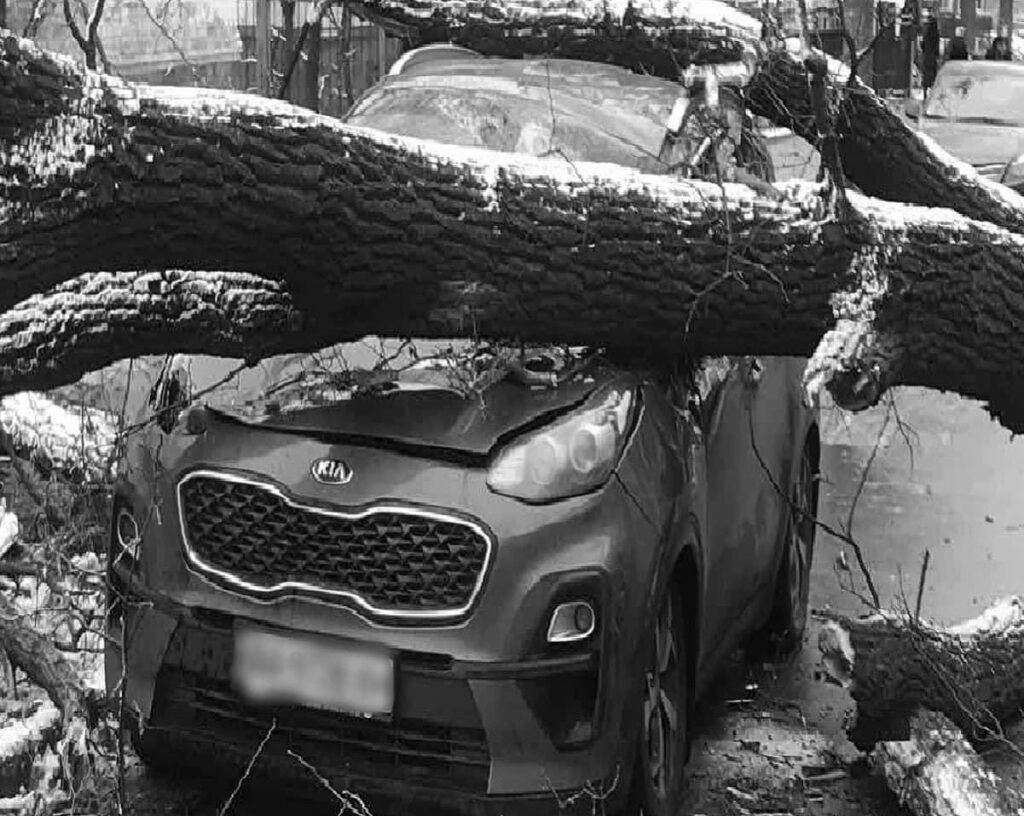
Branch falls on a car: over UAH 414,000 recovered from a municipal enterprise
A tree branch fell on a car in Kyiv. The court ordered a municipal enterprise to pay over UAH 414,000 in damages and costs; the appeal court upheld it.