
Which route a divorce takes depends on the situation: whether there are children, whether both spouses agree, and whether there is a dispute about property or the children. Choosing the right procedure saves months.
When to get in touch
- both spouses agree to divorce and there are no children
- spouses with children have agreed on how the children are to be brought up
- the other spouse does not agree, or is avoiding the process
- property, maintenance or the child’s place of residence have to be resolved at the same time
Recognise your situation?
First consultation free of charge (Mon–Fri, 9:00–18:00). The fee for further work is agreed in writing before it begins – how we calculate fees.
What the lawyer does
- chooses the best route: the civil registry office or the court
- prepares the joint application or the statement of claim and the supporting documents
- drafts the agreement on the upbringing and maintenance of the child for a court divorce on joint application
- represents the client in court, including where the other spouse objects
- combines the process with disputes over property, maintenance and children
- sees the matter through to the marriage being dissolved
How to divorce: civil registry office or court
- Civil registry office, joint application – where the spouses have no children (part 1 of Article 106 of the Family Code). If one spouse cannot file the application in person for a valid reason, the other spouse may file it on their behalf, certified by a notary or by an equivalent authority.
- Civil registry office, application by one spouse – where the other spouse has been declared missing or declared incapable (part 1 of Article 107 of the Family Code).
- Court, joint application – where the spouses have children. The application is accompanied by a written agreement on whom the children will live with, how the parent living separately will take part in providing for them and how that parent will exercise the right to bring them up in person (part 1 of Article 109 of the Family Code). An agreement between the spouses on the amount of child support must be certified by a notary (part 2 of Article 109).
- Court, claim by one spouse – where the other spouse does not agree to the divorce or there is no agreement about the children (Article 110 of the Family Code).
A property dispute does not prevent a divorce at the civil registry office (part 3 of Article 106, part 2 of Article 107 of the Family Code): property can be divided separately – see Division of marital property.
How long a divorce takes
- Civil registry office – the record of divorce is made one month after the application is filed, provided it has not been withdrawn (part 2 of Article 106 of the Family Code).
- Court, joint application – the court grants the divorce one month after the application is filed; until then the spouses may withdraw it (part 4 of Article 109 of the Family Code).
- Court, claim – the court takes steps to reconcile the spouses (part 1 of Article 111 of the Family Code) and may stay the proceedings, setting a reconciliation period of no more than six months (part 7 of Article 240 of the Civil Procedure Code of Ukraine (CPC)). No reconciliation steps are taken where one of the spouses has committed domestic violence (part 2 of Article 111 of the Family Code).
- When the marriage ends – after a divorce at the civil registry office, on the day the divorce is registered; after a divorce by the court, on the day the court judgment takes effect (Article 114 of the Family Code).
Where to file and what it costs
- As a general rule, the claim is filed with the court at the respondent’s registered place of residence or stay (part 1 of Article 27 CPC).
- The claimant may file at their own registered place of residence or stay if they are supporting minor children or cannot travel to the respondent’s place of residence for health or other valid reasons. By agreement of the spouses, the case may be heard at the place of residence of either of them (part 2 of Article 28 CPC).
- The court fee for a divorce claim is 0.4 of the subsistence minimum for able-bodied persons (Article 4 of the Law of Ukraine “On Court Fee”). In 2026 that subsistence minimum is UAH 3,328 (Article 7 of the Law of Ukraine “On the State Budget of Ukraine for 2026”), so the fee is UAH 1,331.20, or UAH 1,064.96 if the claim is filed electronically (coefficient 0.8, part 3 of Article 4 of the Law of Ukraine “On Court Fee”).
- We agree our fee in writing before work begins – see Fees and payment.
Legal basis
Dissolution of marriage by the civil registry office on the joint application of spouses who have no children is governed by Article 106 of the Family Code of Ukraine (the record is made one month after the application is filed). Court procedure: on the joint application of spouses with children, Article 109; on the claim of one spouse, Article 110; the court takes steps towards reconciling the spouses unless this is contrary to the moral principles of society, and takes no such steps where one of the spouses has committed domestic violence (Article 111). The moment at which the marriage ends is determined by Article 114.
Legislation and case law are updated over time; this page reflects the position as of November 2026.
Frequently asked questions
Can I divorce if my spouse objects?
Yes, through the courts on a claim (Article 110 of the Family Code). The court dissolves the marriage if it finds that further cohabitation and preservation of the marriage would be contrary to the material interests of one of the spouses or of their children (Article 112); the other spouse’s objection does not in itself prevent this.
How long does a registry office divorce take?
The record of dissolution is made one month after the joint application is filed, provided it has not been withdrawn (Article 106 of the Family Code).
How much does a divorce through the court cost?
The court fee for a divorce claim in 2026 is UAH 1,331.20, or UAH 1,064.96 if filed electronically (Article 4 of the Law of Ukraine “On Court Fee”). We agree the lawyer’s fee in writing before work begins.
Where should a divorce claim be filed?
As a general rule, with the court at the respondent’s place of residence (part 1 of Article 27 CPC). At your own place of residence if you are supporting minor children or cannot travel to the respondent’s place of residence for valid reasons; by agreement of the spouses, at the place of residence of either of them (part 2 of Article 28 CPC).
When is the marriage considered ended?
After a divorce at the civil registry office, on the day the divorce is registered; after a divorce by the court, on the day the court judgment takes effect (Article 114 of the Family Code). The court sends the judgment that has taken legal effect to the civil registry office (part 2 of Article 115).
Can I keep my married last name after a divorce?
Yes. A person who changed their last name on registering the marriage may continue to use it or revert to their pre-marriage last name (Article 113 of the Family Code).
Need legal assistance? Call us or leave a request – a lawyer will contact you and go through your situation with care.
How we work
-
You submit a request
-
We analyse your situation
-
We agree a strategy with you
-
We protect your interests


Similar services
-
2020
year founded
-
9
attorneys on the team
-
11
practice areas
-
24/7
urgent legal assistance
Useful articles
Successful cases
-
 Won
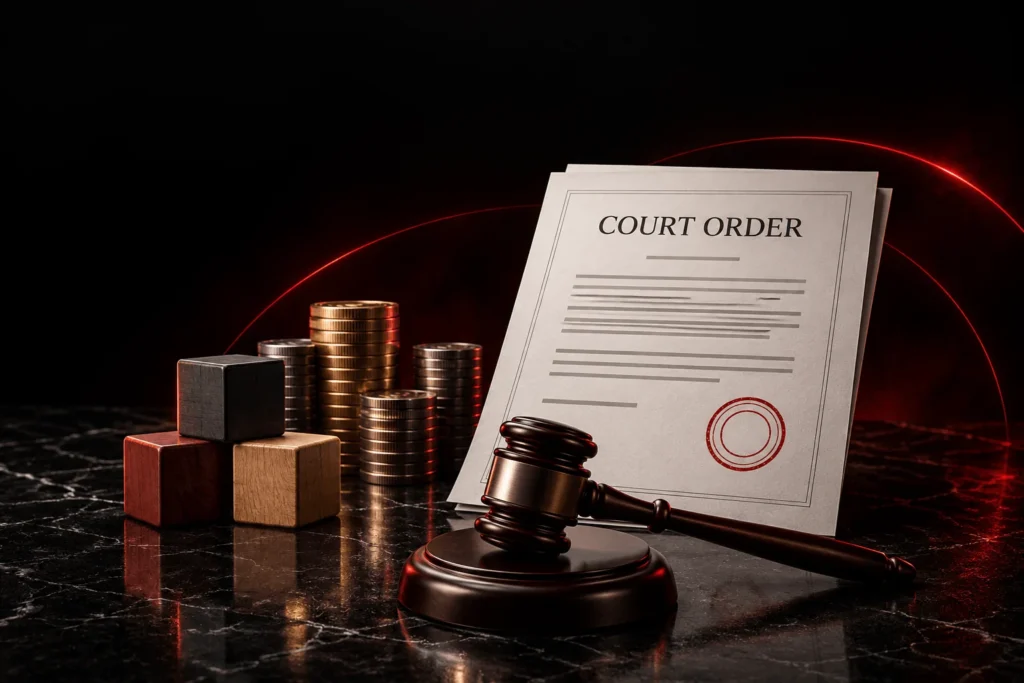
Child maintenance for three children recovered through a court order
The application was filed on 10 March and the court order issued on 11 March: maintenance for three children – half of the father's income monthly.
-
 Won
Cohabitation without registered marriage established to secure an inheritance
The court established that our client had lived with the deceased as a family for over 20 years without marriage, opening the way to her inheritance.