
A Child Owns or Co-owns a Flat: Can It Be Sold?
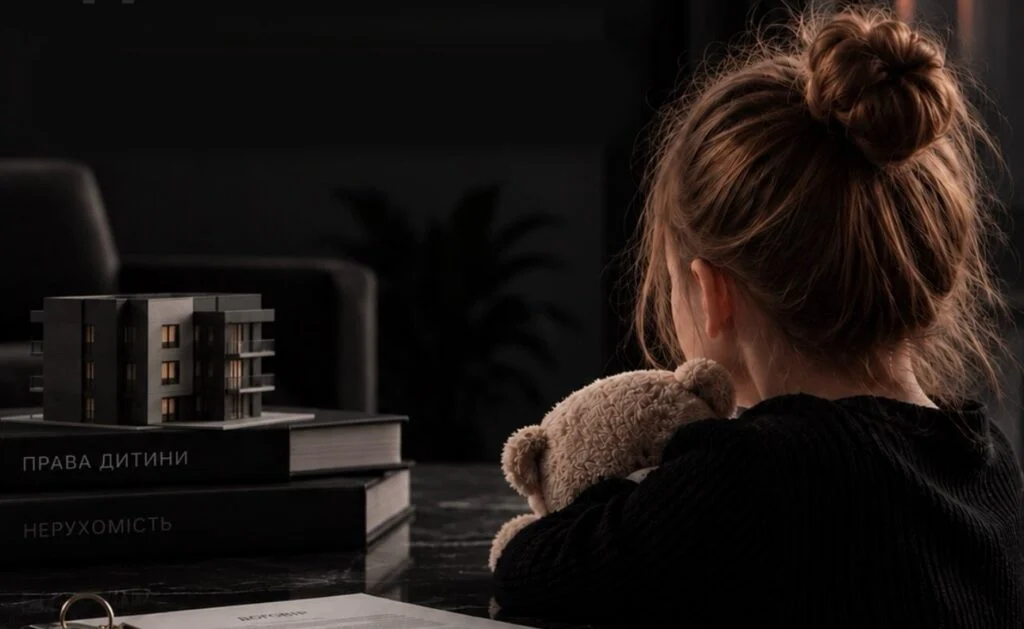
Yes, but only under a special procedure that protects the child’s property and housing rights. Without the permission of the guardianship authority, parents may not enter into transactions concerning housing (and the land plot under it) owned or used by their child under 14. Permission is likewise required to sell, give away, exchange, contribute to authorised capital, divide, separate a share of, pledge or mortgage the child’s real estate, an unfinished construction project, future real estate or other valuable property, including a vehicle (part 2 of Article 177 of the Family Code of Ukraine (FC)). If, however, the child acquires property free of charge – for example, receives a flat as a gift – no permission is needed.
Permission of the guardianship authority
The key condition for concluding the contract is the permission of the guardianship authority. It is granted only if the child’s right to housing is guaranteed to be preserved: the guardianship authority checks the documents and assesses whether the child’s property rights would be narrowed. So the mere fact that the parents have agreed on the terms of the sale does not mean that permission will be granted.
How to obtain permission
- The documents are submitted to the children’s service at the location of the property: an application from each parent (guardian or custodian), a document confirming the child’s right of ownership or use, an extract from the State Register of Real Property Rights, a copy of the child’s birth certificate and other documents listed in paragraph 66 of the Procedure approved by Resolution of the Cabinet of Ministers of Ukraine No. 866 of 24 September 2008.
- Permission is granted by the district state administration in Kyiv and Sevastopol, or by the executive body of a city, city district, settlement or village council – on the recommendation of the children’s service.
- The children’s service considers the documents within 10 working days and establishes whether there are grounds for refusal.
- Permission is formalised by a decision, an extract from which is issued by the children’s service.
- The overall time limit is up to one month from the date the application is received.
- A decision granting or refusing permission can be challenged in court.
Who signs the contract
- A child under 14: the contract is concluded on the child’s behalf by the parents or other legal representatives. As a general rule, the consent of both parents is required, and if one of them performs the transaction, the other’s consent must be notarised.
- A child aged 14 to 18 performs the transaction themselves, but with the notarised consent of their parents or other legal representatives. The parents may give such consent only with the permission of the guardianship authority (part 3 of Article 177 FC).
When one parent’s consent is not required
The law contains an exhaustive list of cases in which such a transaction may be performed without the consent of one of the parents (part 6 of Article 177 FC) – if that parent:
- has gone missing in special circumstances or has been declared missing;
- is in captivity or is being held hostage;
- has been interned in a neutral state;
- has an unknown place of residence;
- has lived apart from the child for at least six consecutive months and does not take part in raising and maintaining the child.
Such circumstances must be confirmed.
The guardianship authority may refuse permission only on the grounds expressly listed in part 5 of Article 177 FC. In particular, where the parents disagree about the transaction, a court dispute concerning the property is pending, the applicant has provided materially false information, or the transaction would narrow the child’s property rights or violate the child’s interests.
Planning a transaction with real estate owned by a child, or has the guardianship authority refused permission? More about how we handle such cases is in our “Family law” section.
Have a similar situation? First consultation free of charge (Mon–Fri, 9:00–18:00).