
Compensation for material and moral damage
First consultation free of charge (Mon–Fri, 9:00–18:00)
Call +380 (97) 158-30-28The right to compensation arises not only for financial loss but also for mental distress. The central task is proving the extent of the damage and the causal link with the acts of the person responsible.
When to get in touch
- your property has been damaged or destroyed
- damage was caused in a road traffic accident
- damage was caused by an employee of a company in the course of their duties
- your rights have been infringed and you have suffered mental distress
- earnings or a breadwinner have been lost through injury or the death of a family member
Recognise your situation?
First consultation free of charge (Mon–Fri, 9:00–18:00). The fee for further work is agreed in writing before it begins – how we calculate fees.
What the lawyer does
- identifies who is liable to compensate
- calculates the losses and makes the case for moral damages
- arranges the valuation of the property and gathers the evidence
- prepares the claim and represents the client in court
- deals with insurance recovery where that applies
- handles enforcement of the judgment
Who is liable, and when
- Property damage caused by unlawful decisions, acts or omissions is compensated in full by the person who caused it; that person is released from liability if they prove the damage was not their fault (parts 1 and 2 of Article 1166 of the Civil Code). In other words, it is for the person who caused the damage to prove absence of fault.
- Damage caused by an employee in the course of their employment (official) duties is compensated by the employer – a legal entity or an individual; a client is liable for a contractor who acted on its instructions (parts 1 and 2 of Article 1172 of the Civil Code).
- Persons who caused damage by joint acts or omissions are jointly and severally liable to the injured party; at the injured party’s request, the court may apportion liability according to the degree of fault (Article 1190 of the Civil Code).
- Damage caused by the injured party’s own intent is not compensated; if the injured party’s gross negligence contributed to the damage or increased it, the compensation is reduced (parts 1 and 2 of Article 1193 of the Civil Code).
- Where the damage was caused by a criminal offence, a civil claim may be brought within the criminal proceedings before the trial begins (part 1 of Article 128 CrPC). More on the page “Protecting the rights of the victim”.
Road accidents and sources of increased danger
- A source of increased danger includes, in particular, activity involving the use of vehicles, machinery and equipment. The damage is compensated by the person who holds such an object on a proper legal basis (ownership, lease, contract for work and so on) (parts 1 and 2 of Article 1187 of the Civil Code).
- The holder is liable unless it proves that the damage resulted from force majeure or the injured party’s intent (part 5 of Article 1187 of the Civil Code).
- Where damage results from the interaction of several sources (for example, a collision between cars), it is compensated on the general basis – according to each party’s fault; to third parties, the holders are liable regardless of fault (Article 1188 of the Civil Code).
- If liability is insured and the insurance payment is not enough to cover the damage in full, the person who caused it pays the difference between the actual damage and the payment (Article 1194 of the Civil Code).
How the amount of compensation is determined
- Losses comprise actual losses (destruction of or damage to property, costs of restoring the right) and lost profits (part 2 of Article 22 of the Civil Code).
- At the injured party’s choice, the court may order compensation in kind (handing over a thing of the same kind, repairing the damaged one) or compensation of the losses in full; the amount is based on the real value of the property lost at the time of the hearing or the cost of the work needed to restore it (Article 1192 of the Civil Code).
- Moral damage consists, in particular, of physical pain and suffering from injury to health, mental suffering from unlawful conduct towards the person or their family, or from the destruction of or damage to their property, and the belittling of honour, dignity or business reputation (part 2 of Article 23 of the Civil Code).
- Moral damage is compensated independently of property damage and is not linked to its amount (part 4 of Article 23 of the Civil Code). It is compensated regardless of fault, in particular, where injury, other harm to health or death was caused by a source of increased danger (clause 1 of part 2 of Article 1167 of the Civil Code).
Injury, harm to health or death
- The person who caused the harm compensates lost earnings (income) and additional expenses – enhanced nutrition, sanatorium treatment, medicines, prosthetics, care and so on; the injured person’s pension and other income are not taken into account (parts 1 and 3 of Article 1195 of the Civil Code).
- Moral damage caused by injury or other harm to health may be compensated in a lump sum or by monthly payments; moral damage caused by death is compensated to the spouse, parents, children and persons who lived with the deceased as one family (Article 1168 of the Civil Code).
- On the death of a breadwinner, compensation is due to persons unable to work who were dependent on the deceased or entitled to maintenance from them, and to a child born after the death – for the periods and in the amounts set by Article 1200 of the Civil Code. Funeral costs and the cost of a headstone are compensated separately (Article 1201 of the Civil Code).
Time limits for going to court
- The general limitation period is three years from the day the person learned or could have learned of the infringement of their right or of the person who infringed it (Article 257 and part 1 of Article 261 of the Civil Code).
- No limitation period applies to claims for compensation for injury, other harm to health or death, except where the harm was caused by defects in a movable product (clause 3 of part 1 of Article 268 of the Civil Code).
Legal basis
The general grounds of liability for property damage are set out in Article 1166 of the Civil Code of Ukraine and for moral damage in Article 1167; losses are defined in Article 22 and moral damage in Article 23. Damage caused by an employee in the course of their duties is compensated under Article 1172; damage caused by a source of increased danger under Article 1187. The interaction of several sources of increased danger is governed by Article 1188, joint and several liability by Article 1190, the ways of compensating damage to property by Article 1192, the injured party’s fault by Article 1193, insufficient insurance payments by Article 1194, harm caused by injury or death by Articles 1168, 1195, 1200 and 1201, and limitation periods by Articles 257, 261 and 268 of the Civil Code.
Legislation and case law are updated over time; this page reflects the position as of November 2026.
Frequently asked questions
Does fault have to be proved?
As a general rule damage is compensated where there is fault (Article 1166 of the Civil Code), but the law also provides for liability regardless of fault – in particular for a source of increased danger (Article 1187).
How is the amount of moral damages determined?
The court takes into account the nature of the offence, the depth of the physical and mental suffering, any impairment of the injured person’s abilities or loss of the opportunity to use them, the degree of fault of the person who caused the damage (where fault is a ground for compensation) and other significant circumstances, applying the requirements of reasonableness and fairness (part 3 of Article 23 of the Civil Code). We support the figure with documents and evidence.
Can I claim more from the driver at fault than the insurer has paid?
Yes. If the insurance payment is not enough to cover the damage in full, the person who insured their liability pays the injured party the difference between the actual damage and the insurance payment (Article 1194 of the Civil Code).
Is there a limitation period for claims arising from harm to health?
No limitation period applies to claims for compensation for injury, other harm to health or death, except harm caused by defects in a movable product (clause 3 of part 1 of Article 268 of the Civil Code). For other claims, the general limitation period is three years (Article 257 of the Civil Code).
Need legal assistance? Call us or leave a request – a lawyer will contact you and explain what to do in your situation.
How we work
-
You submit a request
-
We analyse your situation
-
We agree a strategy with you
-
We protect your interests


Similar services
- Commercial disputes
- Bankruptcy and insolvency
- Land bank audit, leases, servitudes and change of designated use
-
2020
year founded
-
9
attorneys on the team
-
11
practice areas
-
24/7
urgent legal assistance
Useful articles


Successful cases
-
 Won
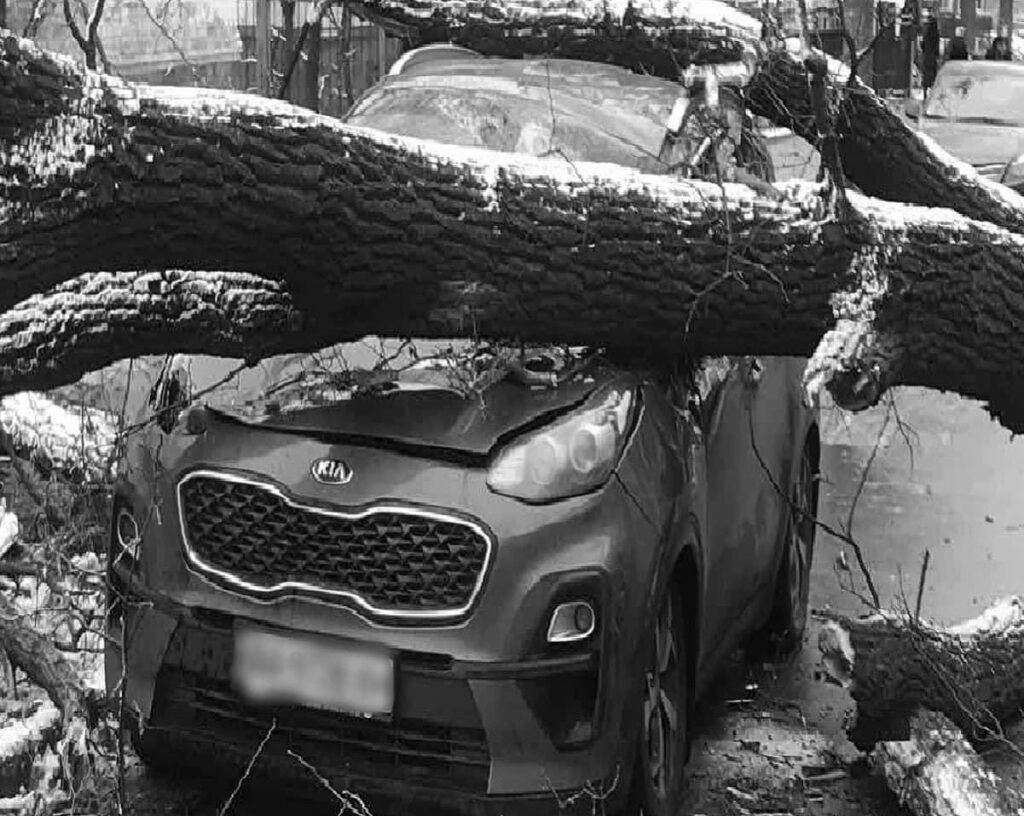
Branch falls on a car: over UAH 414,000 recovered from a municipal enterprise
A tree branch fell on a car in Kyiv. The court ordered a municipal enterprise to pay over UAH 414,000 in damages and costs; the appeal court upheld it.
-
 Won
Over UAH 5 million from a state-owned enterprise: court judgment enforced
Judicial control and a complaint against the enforcement officer: SE Guaranteed Buyer complied with the judgment – UAH 4.9m debt, court fees and legal costs.
-
 Won
Heating debt: default judgment set aside, dispute ended by a settlement agreement
A default judgment for a heating debt was set aside. Under the settlement, the claimant waived 3% per annum and inflation losses; the court fee was split.