
Appealing a judgment: appeal and cassation
First consultation free of charge (Mon–Fri, 9:00–18:00)
Call +380 (97) 158-30-28A judgment is not final while the procedural routes for reviewing it remain open. What matters most is meeting the time limit and the quality of the reasoning in the complaint.
When to get in touch
- a judgment has been delivered that you disagree with
- a court ruling needs to be challenged
- the time limit for filing an appellate complaint is running out
- an appellate court decision is open to cassation review
Recognise your situation?
First consultation free of charge (Mon–Fri, 9:00–18:00). The fee for further work is agreed in writing before it begins – how we calculate fees.
What the lawyer does
- analyses the judgment and the case file for grounds to quash or vary it
- determines whether the decision is one that can be challenged at all
- prepares the appellate or cassation complaint
- observes the time limits for filing it
- appears before the appellate or cassation court
- deals with objections from the other participants
What can be challenged under appellate procedure and who may file an appellate complaint
Decisions of a court of first instance that have not entered into legal force may be challenged under appellate procedure: judgments, rulings on applying or refusing to apply compulsory medical or reformatory measures, other rulings in cases provided for by the Code, and rulings of an investigating judge (parts 1 and 3 of Article 392 of the Criminal Procedure Code of Ukraine (CrPC)). Rulings made during the trial before the judgment are not challenged separately, except in cases specified by the CrPC – objections to them are included in the appellate complaint against the judgment. Rulings on detention made before the decision on the merits are challenged separately (part 2 of Article 392 CrPC).
An appellate complaint may be filed, in particular, by the accused, their legal representative or defence counsel – against a judgment of conviction as regards the interests of the accused, and against a judgment of acquittal as regards the reasons and grounds for acquittal; by the public prosecutor; by the victim – within the limits of the claims made in the court of first instance; by the civil plaintiff and the civil defendant – as regards the civil action (Article 393 CrPC).
For certain judgments the grounds for challenge are limited. A judgment based on a reconciliation agreement or a plea agreement may be challenged by the accused only on the grounds expressly named in the law – for example, where the punishment imposed is more severe than the one agreed by the parties, or where the consequences of concluding the agreement were not explained to them (parts 3 and 4 of Article 394 CrPC). A judgment given in simplified proceedings cannot be challenged under appellate procedure on the grounds that the case was considered in the absence of the participants, that evidence was not examined at the hearing, or in order to contest the circumstances established by the pre-trial investigation (part 1 of Article 394 CrPC).
Time limits and how to file an appellate complaint
- a judgment, or a ruling on applying or refusing to apply compulsory medical or reformatory measures – thirty days from its pronouncement;
- a ruling on detention (ordering detention, replacing another measure of restraint with detention, extending detention) made during the trial before the decision on the merits – five days from its announcement;
- other rulings of the court of first instance – seven days from their announcement;
- a ruling of an investigating judge – five days from its announcement (part 2 of Article 395 CrPC).
For a person held in custody, the time limit runs from the moment they receive a copy of the court decision. Where a ruling was made without summoning the person challenging it, or a judgment was given without summoning them under the simplified procedure (Article 382 CrPC), the time limit runs from the day they receive a copy of the decision (part 3 of Article 395 CrPC). An appellate complaint against a judgment is filed through the court that gave it (clause 1 of part 1 of Article 395 CrPC). If no appellate complaint is filed, the judgment enters into legal force once the time limit for filing it has expired (part 1 of Article 532 CrPC).
The day from which a time limit starts (for example, the day the judgment is pronounced) is not counted; a time limit counted in days expires at midnight on its last day, and one counted in months – on the corresponding date of the last month (parts 3–5 of Article 115 CrPC). Weekends and public holidays are included, but if the last day falls on a non-working day, the next working day is deemed to be the last day (part 7 of Article 115 CrPC). Where the complaint is filed at the court itself, the time limit expires at the end of the court’s working day (part 6 of Article 115 CrPC). The time limit is not missed if the complaint is posted before it expires or, in the case of a person held in custody, handed to an official of the institution (Article 116 CrPC).
Under martial law, where there is no objective possibility of filing an appellate or cassation complaint within the time limits set by Articles 395 and 426 CrPC, it is filed as soon as this becomes possible, but no later than 15 days after martial law is terminated or lifted (clause 5 of part 1 of Article 615 CrPC). A time limit missed in such proceedings may be renewed if the motion is filed no later than 60 days after martial law is terminated or lifted (paragraph 2 of part 1 of Article 117 CrPC). Under martial law, the court may pronounce only the operative part of the judgment, but hands the participants the full text on the day of pronouncement (part 15 of Article 615 CrPC).
The appellate complaint states the appellant’s claims and the reasoning for them – why the court decision is unlawful or unfounded – as well as any motion to examine evidence (clauses 4 and 5 of part 2 of Article 396 CrPC). Where these requirements are not met, the court takes no action on the complaint and sets a period for correcting the shortcomings – no more than fifteen days from receipt of the ruling (part 1 of Article 399 CrPC).
Grounds for quashing or varying a judgment
The grounds for quashing or varying a court decision in the appellate court are (parts 1 and 2 of Article 409 CrPC):
- incomplete court proceedings;
- inconsistency of the court’s findings with the factual circumstances of the criminal proceedings;
- a significant violation of the requirements of criminal procedure law;
- wrong application of the law of Ukraine on criminal liability;
- inconsistency of the punishment imposed with the gravity of the criminal offence and the personality of the accused.
Significant violations are those that prevented or could have prevented the court from giving a lawful and well-founded decision. Some of them require the decision to be quashed in any event – in particular, a decision given by an unlawfully composed court, a trial conducted without defence counsel where their participation is mandatory, a breach of the rules of jurisdiction, or failure to record the court proceedings by technical means (parts 1 and 2 of Article 412 CrPC).
How the appellate court considers an appellate complaint
The appellate court reviews the decision within the scope of the appellate complaint; it may go beyond that scope if this does not worsen the position of the accused (parts 1 and 2 of Article 404 CrPC). Upon a motion of the participants, the court must re-examine circumstances that the court of first instance examined incompletely or with violations. It may examine evidence not examined at first instance only if a motion to examine it was made in the court of first instance or if it came to light after the challenged decision was given (part 3 of Article 404 CrPC).
Following its review, the appellate court may leave the judgment unchanged, vary it, quash it in full or in part and give a new judgment, quash it and close the criminal proceedings, or order a new trial in the court of first instance (part 1 of Article 407 CrPC). The court may worsen the position of the accused – for example, apply the law on a more serious criminal offence or a more severe punishment – only where the public prosecutor, the victim or their representative has filed an appellate complaint on those grounds (part 1 of Article 421 CrPC).
Cassation complaint to the Supreme Court
Judgments of a court of first instance, after their review under appellate procedure, and decisions of the appellate court in respect of them may be challenged under cassation procedure; rulings – where they prevent further criminal proceedings (parts 1 and 2 of Article 424 CrPC). Rulings of an investigating judge cannot be challenged under cassation procedure after their review under appellate procedure (part 4 of Article 424 CrPC). The complaint is considered by a panel of judges of the Criminal Court of Cassation of the Supreme Court (part 5 of Article 31 CrPC).
A cassation complaint is filed directly with the court of cassation within three months of the pronouncement of the appellate court’s decision; a convicted person held in custody has the same period from the day they are served with a copy of the decision (parts 1 and 2 of Article 426 CrPC).
The Supreme Court checks whether the rules of substantive and procedural law and the legal assessment of the circumstances were applied correctly, but does not examine evidence or establish circumstances that were not established in the challenged decision (part 1 of Article 433 CrPC). The grounds for quashing or varying a decision are a significant violation of the requirements of criminal procedure law, wrong application of the law of Ukraine on criminal liability, and inconsistency of the punishment imposed with the gravity of the criminal offence and the personality of the convicted person (part 1 of Article 438 CrPC). Incomplete court proceedings and inconsistency of the findings with the factual circumstances are not on this list – those arguments are raised in the appellate complaint. If it follows from the cassation complaint and the attached decisions that there are no grounds to grant it, the court refuses to open cassation proceedings (clause 2 of part 2 of Article 428 CrPC), which is why the reasoning of the complaint is decisive.
Legal basis
The court decisions which may be challenged under appellate procedure are set out in Article 392 of the Criminal Procedure Code of Ukraine; the right to appeal – Article 393, specific aspects of appellate challenge of certain court decisions – Article 394, the procedure and time limits for appeal – Article 395, requirements for the appellate complaint – Article 396, the scope of review by the court of appeals – Article 404, the powers of the appellate court – Article 407, the grounds for setting aside or changing decisions – Articles 409–414, inadmissibility of deterioration of the legal position of the accused – Article 421. The court decisions which may be challenged under cassation procedure – Article 424, the right to cassation – Article 425, the procedure and time limits for cassation appeal – Article 426, requirements for the cassation complaint – Article 427, the scope of review by the court of cassation – Article 433, the powers of the court of cassation – Article 436, the grounds for reversing or changing decisions – Article 438. Calculation and respecting of procedural periods – Articles 115 and 116, renewal of a procedural period – Article 117, special rules under martial law – Article 615 of the Criminal Procedure Code of Ukraine.
Legislation and case law are updated over time; this page reflects the position as of November 2026.
Frequently asked questions
What are the time limits for challenging a judgment?
Thirty days from pronouncement for an appellate complaint against a judgment, seven days for other rulings of the court of first instance, and five days for rulings on detention during the trial and for rulings of an investigating judge (part 2 of Article 395 CrPC). A cassation complaint is filed within three months of the pronouncement of the appellate court’s decision (part 2 of Article 426 CrPC). For a person held in custody, the time limit runs from the day they receive a copy of the decision.
Can a complaint still be filed after the time limit has expired?
Yes, if the time limit was missed for a valid reason: the court renews it by a ruling upon a motion of the person concerned (part 1 of Article 117 CrPC). If the issue of renewal is not raised, or the court finds no grounds for it, the appellate complaint is returned (clause 4 of part 3 of Article 399 CrPC). The motion itself does not suspend enforcement of the challenged decision (part 3 of Article 117 CrPC); if the time limit for appellate challenge is renewed, the judgment is deemed not to have entered into legal force (part 3 of Article 532 CrPC).
Can the appellate court increase the sentence?
Only where the public prosecutor, the victim or their representative has filed an appellate complaint on those grounds. On a complaint by the defence, the court cannot worsen the position of the accused (part 2 of Article 404 and part 1 of Article 421 CrPC).
Can new evidence be submitted in the appellate court?
Yes, but only evidence whose examination was requested in the court of first instance, or evidence that came to light after the judgment was given (part 3 of Article 404 CrPC). The appellate complaint explains why it was not submitted earlier (part 4 of Article 396 CrPC).
Need legal assistance? Call us or leave a request – a lawyer will contact you and explain what to do in your situation.
How we work
-
You submit a request
-
We analyse your situation
-
We agree a strategy with you
-
We protect your interests


Similar services
- Review of a judgment on newly discovered or exceptional grounds
- Enforcement of sentence: parole and deferral
- Defence of business in criminal proceedings
-
2020
year founded
-
9
attorneys on the team
-
11
practice areas
-
24/7
urgent legal assistance
Useful articles

Successful cases
-
 Won
Protecting victims: defendant sentenced to 5 years, damages awarded to our clients
Two clients suffered grievous bodily harm. The defendant was sentenced to 5 years, and UAH 264,498.22 was awarded to the victims.
-
 Won
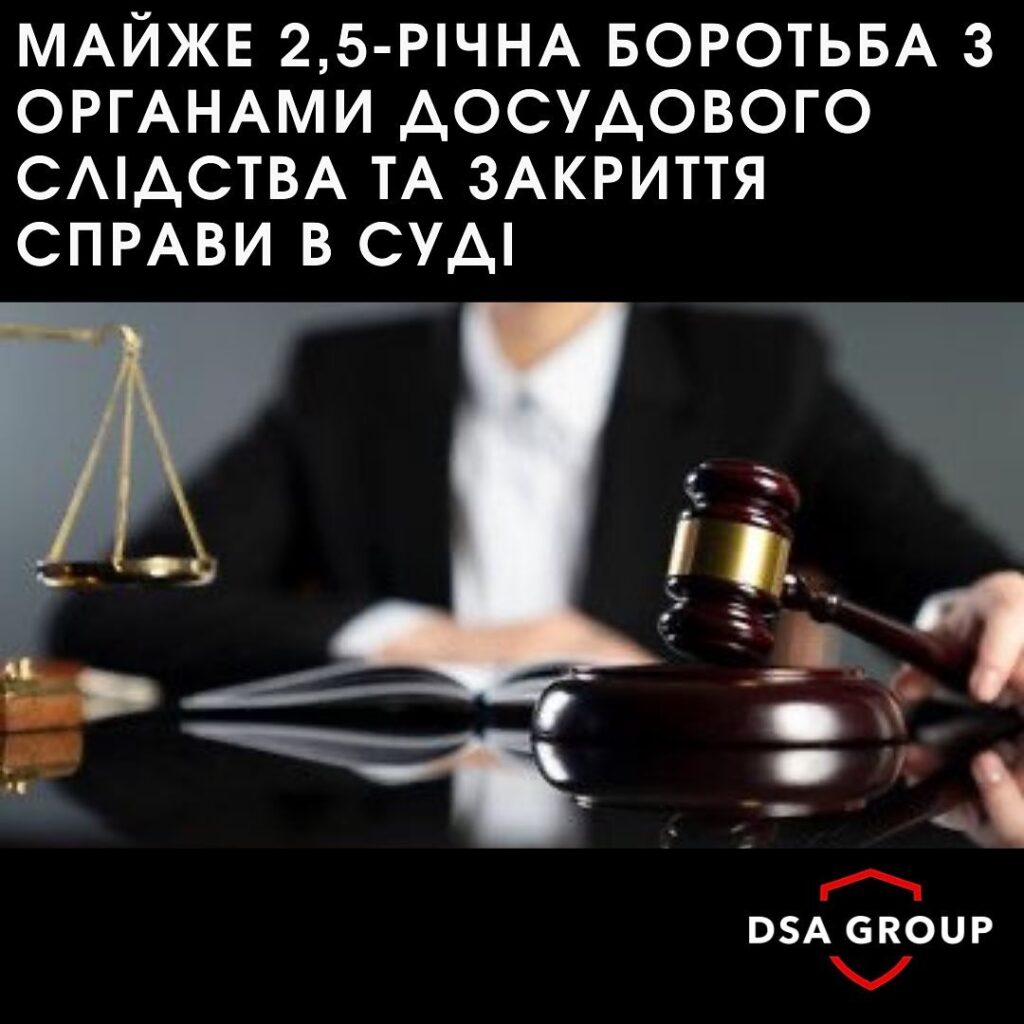
Case under Article 369(3) of the Criminal Code closed as the investigation period expired: upheld by the Supreme Court
The indictment reached the court after the investigation period had expired. The case was closed under Article 284(1)(10) CPC; the Supreme Court agreed.