
How to Protect Yourself During a Search: A Step-by-Step Guide and Your Rights

A search is an investigative (search) action carried out to find and record evidence, to locate an instrument of a criminal offence or property obtained by criminal means, and to establish the whereabouts of wanted persons. The law requires a search to be lawful, proportionate and procedurally correct. The basic rules are set out in Chapter 20 of the Criminal Procedure Code of Ukraine, “Investigative (Search) Actions” (in particular Articles 233–236).
1. The first rule: stay calm
If investigators arrive with a ruling of an investigating judge, take a moment to look through the document and immediately state: “I want to see a lawyer.” Do not give any explanations until the lawyer arrives.
The presence of a lawyer during a search makes it possible to record breaches of the procedure promptly and to file motions and objections.
2. Checking the court ruling
Ask for the original ruling or a duly certified copy. Check:
- the jurisdiction of the court and the full name of the investigating judge;
- the address of the premises where the search is authorised and the period of validity of the ruling, which may not exceed one month from the date it was issued;
- the persons who have been authorised to carry out the search.
Entry without a ruling is possible only in the case of an urgent search (Article 233 of the Criminal Procedure Code): saving lives, direct pursuit of a suspect, etc. — and even then subsequent judicial approval is required.
3. Video recording and attesting witnesses
A search must be video-recorded, and two attesting witnesses must be present. You have the right to make your own video recording (without obstructing the investigative actions). If the investigators’ video recording is missing or incomplete, this is a significant procedural defect.
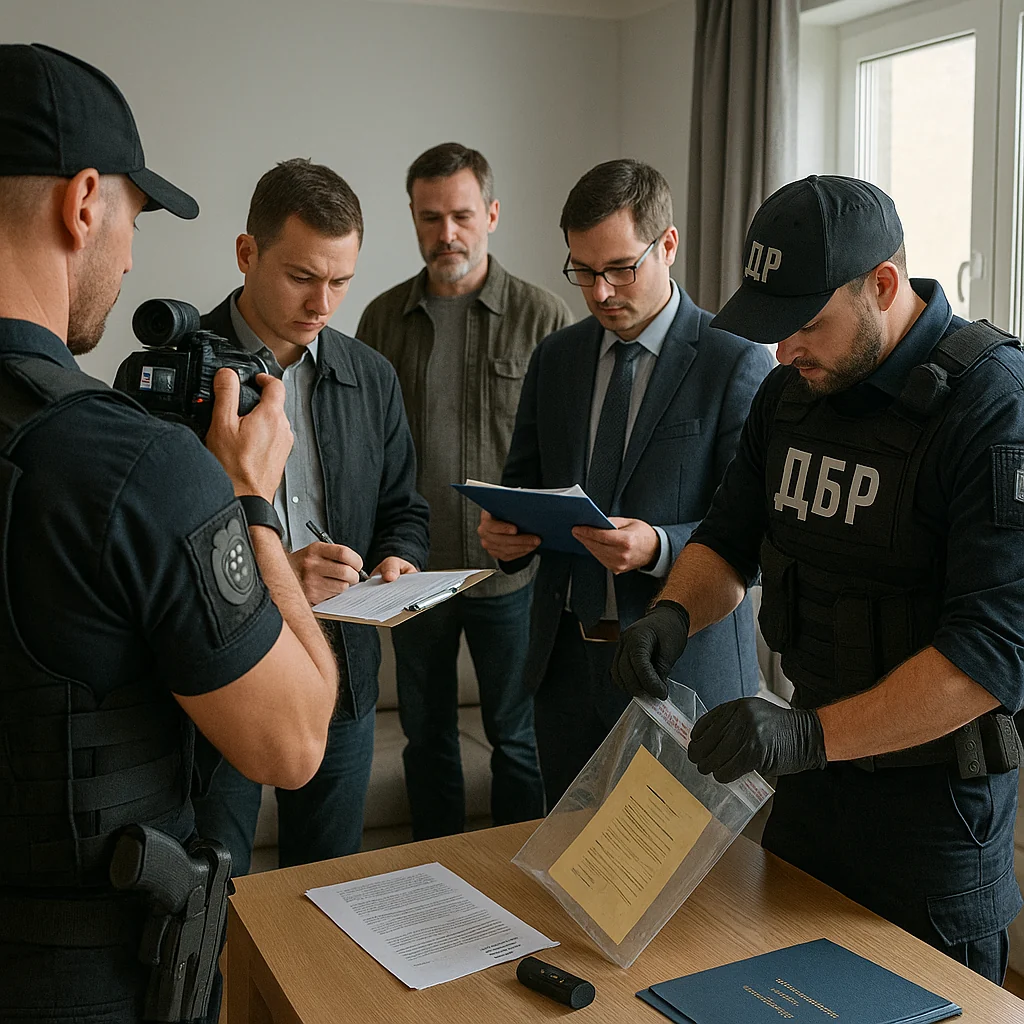
4. Limits of the search and searches without a ruling of an investigating judge
Investigators may not go beyond the ruling (a different address, different premises, a different list of items). If they try to search other premises or the personal belongings of persons not named in the ruling, the lawyer enters objections in the report and files a motion to stop such actions. Any seizure without a proper legal basis is a ground for a subsequent appeal.
5. The report: read, check, add
Before signing, add your comments, if any:
- errors in the time, address or description of the premises;
- the absence of attesting witnesses or video recording;
- seizure of items not listed in the ruling;
- refusal to provide a copy of the report and its annexes.
A copy of the report (with an inventory of the items seized) must be provided immediately. The lawyer then assesses whether the requirements of Articles 234–236 of the Criminal Procedure Code were met.
6. “Lifting the seizure of property”: how to get back what was taken
If property was seized “temporarily”, the investigator or prosecutor has 48 hours (if the seizure took place during a search under a ruling) or until the next working day (if the seizure took place without a ruling) to file a motion for the arrest of the property (Part 5 of Article 171 of the Criminal Procedure Code). Otherwise, the property must be returned immediately. If an arrest was imposed in breach of the rules or is no longer needed (the item is not physical evidence; there is no risk of destruction or alienation), a motion to lift the arrest of property is filed (Article 174 of the Criminal Procedure Code). If the arrest was imposed to “preserve physical evidence”, the investigation must state which features of physical evidence (Article 98 of the Criminal Procedure Code) the item has. Mere assumptions are not grounds for arrest.
7. Appealing against the search and the investigator’s actions
Breaches of the procedure are recorded in the report and may be grounds for declaring evidence inadmissible (Article 86 of the Criminal Procedure Code). In addition, complaints about the actions or omissions of an investigator or prosecutor are filed with an investigating judge (Articles 303–307 of the Criminal Procedure Code) — this is the standard route for appealing against a search, resolving the issue of the arrest of property and other procedural actions.
8. When to act as quickly as possible
- Equipment with confidential data (attorney-client privilege, bank or commercial secrets) has been seized — urgent motions on the procedure for access/copying, arrest/lifting of arrest and an agreed storage procedure.
- Money or goods have been seized — we put together evidence of their lawful origin and use procedural means to secure the return of temporarily seized property.
At the same time, we prepare a “plan B”: if an arrest is imposed, we immediately file a motion to lift the arrest, focusing on the absence of the criteria of Article 98 of the Criminal Procedure Code and the prosecutor’s failure to meet the test under Part 3 of Article 132 of the Criminal Procedure Code (reasonable suspicion, the need for interference, the achievability of the aim).
Conclusion. Success during a search comes down to procedural discipline: a lawyer on site, careful checking of the ruling, full video recording, an active procedural position and prompt motions regarding property. Anything done “not in accordance with the Criminal Procedure Code” works in your defence.
Need legal help? Fill in the form and our lawyer will call you shortly!
Have a similar situation? Get a free consultation.