
Unblocking VAT invoices suspended in the register
First consultation free of charge (Mon–Fri, 9:00–18:00)
Call +380 (97) 158-30-28Suspending registration of a tax invoice blocks the counterparty’s input VAT credit and often puts contractual relationships at risk. How to get it unblocked depends on the reason for the suspension: a risk criterion applied to the transaction, risky-taxpayer status, or a Data Table that has not been taken into account.
When to get in touch
- a receipt suspending registration of a tax invoice or adjustment calculation has been issued
- the company has been placed on the list of risky taxpayers
- the taxpayer’s Data Table has not been taken into account
- the commission has refused to register the invoice
- the State Tax Service has not replied to the complaint or has dismissed it
Recognise your situation?
First consultation free of charge (Mon–Fri, 9:00–18:00). The fee for further work is agreed in writing before it begins – how we calculate fees.
What the lawyer does
- analyses the receipt and identifies the criterion on which registration was suspended
- prepares the explanations and the set of documents for the commission
- prepares and files the taxpayer’s Data Table with a description of the business
- works on removal from the list of risky taxpayers
- challenges the commissions’ decisions through administrative procedure
- prepares the claim, including a separate challenge to risky status
Why registration is suspended
- An invoice that meets none of the conditions for unconditional registration is checked against three sets of indicators: the taxpayer risk criteria (Annex 1), the positive tax history indicators (Annex 2) and the transaction risk criteria (Annex 3) (item 5 of the Procedure for suspending registration approved by Cabinet of Ministers Resolution No. 1165, “the Suspension Procedure”).
- If the taxpayer meets at least one taxpayer risk criterion, registration is suspended (item 6, first paragraph, of the Suspension Procedure).
- If a transaction in the invoice meets at least one transaction risk criterion, registration is suspended, unless the taxpayer meets at least one positive tax history indicator (item 7 of the Suspension Procedure).
- The suspension receipt is sent within the operating day. It states the number and date of the invoice, the criterion (or criteria) on which registration was suspended with the calculated indicator, and an invitation to file explanations and copies of documents (items 10 and 11 of the Suspension Procedure). Which documents are needed depends on that criterion.
Risky-taxpayer status: how to get off the list
- The decision that a taxpayer meets the risk criteria is made by the regional commission; the taxpayer is placed on the list on the day of the meeting, and the decision is delivered to the electronic cabinet on the day it is made. The decision states the ground and the information on which it is based (item 6 of the Suspension Procedure).
- Where the decision is based on tax information held by the authority (item 8 of Annex 1), it cannot rely on a transaction in an invoice registered more than 180 days before the date of the decision (item 6 of the Suspension Procedure).
- The taxpayer may file information and copies of documents showing that it does not meet the criteria: contracts with annexes, documents on the authority of the persons involved, primary documents on supply, storage and transport, payment documents or bank statements, and product conformity documents. The commission considers them within seven working days (item 6 of the Suspension Procedure).
- If a complaint against a risky-status decision is upheld, the taxpayer is removed from the list no later than the next working day (item 20 of the Procedure for considering complaints approved by the same Resolution, “the Complaint Procedure”).
The taxpayer’s Data Table
- The Data Table lists the taxpayer’s types of activity (KVED codes) and the codes of goods (UKT ZED) and services (State Classifier) that it supplies, purchases or imports (item 13 of the Suspension Procedure).
- The Data Table is filed with an explanation stating the type of activity with reference to tax and other reporting; the regional commission considers it within five working days (items 14 and 15 of the Suspension Procedure).
- A decision not to take the Data Table into account must state the reasons (item 17 of the Suspension Procedure); it can also be challenged (item 1 of the Complaint Procedure). In the cases set out in item 18 of the Suspension Procedure, the State Tax Service takes the Data Table into account automatically.
The complaint to the State Tax Service: key points
- A complaint can be filed against three types of regional commission decision: refusal to register an invoice, refusal to take the Data Table into account, and a finding that the taxpayer meets the risk criteria (item 1 of the Complaint Procedure). The time limit is 10 working days following the day of the decision (item 3 of the Complaint Procedure).
- The complaint is filed electronically (subparagraphs 56.23.1 and 56.23.5 of the Tax Code). The central commission considers it within 10 calendar days or, if the taxpayer has asked to take part, within 30; the period cannot be extended (item 11-1 of the Complaint Procedure).
- Decisions the taxpayer has already challenged in court are not considered under this procedure (item 4 of the Complaint Procedure). A decision of the central commission cannot be challenged administratively – it can be challenged in court within the time limits set by Article 56 of the Tax Code (item 17 of the Complaint Procedure).
Legal basis
Suspension of the registration of a tax invoice or adjustment calculation in the Unified Register of Tax Invoices is provided for by paragraph 201.16 of the Tax Code of Ukraine; the procedure and the grounds are laid down by the Cabinet of Ministers of Ukraine (the Procedure approved by Resolution No. 1165 of 11 December 2019). Explanations and copies of documents may be filed within 365 calendar days following the date on which the tax invoice (or adjustment calculation) was drawn up (item 6 of the Procedure approved by Ministry of Finance Order No. 520 of 12 December 2019); a complaint against a regional commission’s refusal to register is filed within 10 working days following the day of the decision, under paragraph 56.23 of the Tax Code and the complaint procedure approved by the same Resolution No. 1165; it is considered within 10 calendar days (30 if the taxpayer takes part in the hearing), and if no decision on the complaint is sent within that time, the complaint is deemed upheld. The grounds for suspension are set out in items 5–7, the content of the receipt in item 11, inclusion in and removal from the list of risky taxpayers in item 6, and the Data Table in items 13–18 of the Suspension Procedure approved by Resolution No. 1165; the decisions that can be challenged, the time limits for considering complaints and the consequences of upholding them in items 1, 3, 4, 11-1, 16, 17 and 20 of the Complaint Procedure.
Tax legislation and case law change frequently, and some provisions apply only for the period of martial law. This page reflects the position as of November 2026.
Frequently asked questions
Will a Data Table unblock an invoice that is already suspended?
No. The Data Table works prospectively: it reduces the risk of future suspensions, while invoices already suspended are unblocked through explanations and documents, or by challenge.
Can risky status itself be challenged?
Yes. A decision that the taxpayer meets the risk criteria can be challenged administratively or in court; a complaint is filed within 10 working days following the day of the decision (item 3 of the Complaint Procedure approved by Cabinet of Ministers Resolution No. 1165 of 11 December 2019). See our article on unblocking suspended tax invoices.
What does the suspension receipt state?
The number and date of the invoice, the taxpayer or transaction risk criterion on which registration was suspended with the calculated indicator, and an invitation to file explanations and copies of documents (item 11 of the Suspension Procedure approved by Cabinet of Ministers Resolution No. 1165). Which documents to prepare depends on the criterion.
How long does the commission take to consider documents for removal from the risky list?
Seven working days from receipt; the decision is delivered to the electronic cabinet on the day it is made (item 6 of the Suspension Procedure). A negative decision can be challenged before the State Tax Service within 10 working days, or in court.
Need legal assistance? Call us or leave a request – a lawyer will contact you and explain what to do in your situation.
How we work
-
You submit a request
-
We analyse your situation
-
We agree a strategy with you
-
We protect your interests


Similar services
-
2020
year founded
-
9
attorneys on the team
-
11
practice areas
-
24/7
urgent legal assistance
Useful articles

Successful cases
-
 Won
Sole proprietor’s case under Article 155-1(1) CUAO closed: IBAN transfers are not sales without a cash register
The tax authority treated IBAN transfers as sales without a cash register. The court closed the sole proprietor’s case under Article 155-1(1) CUAO.
-
 Won
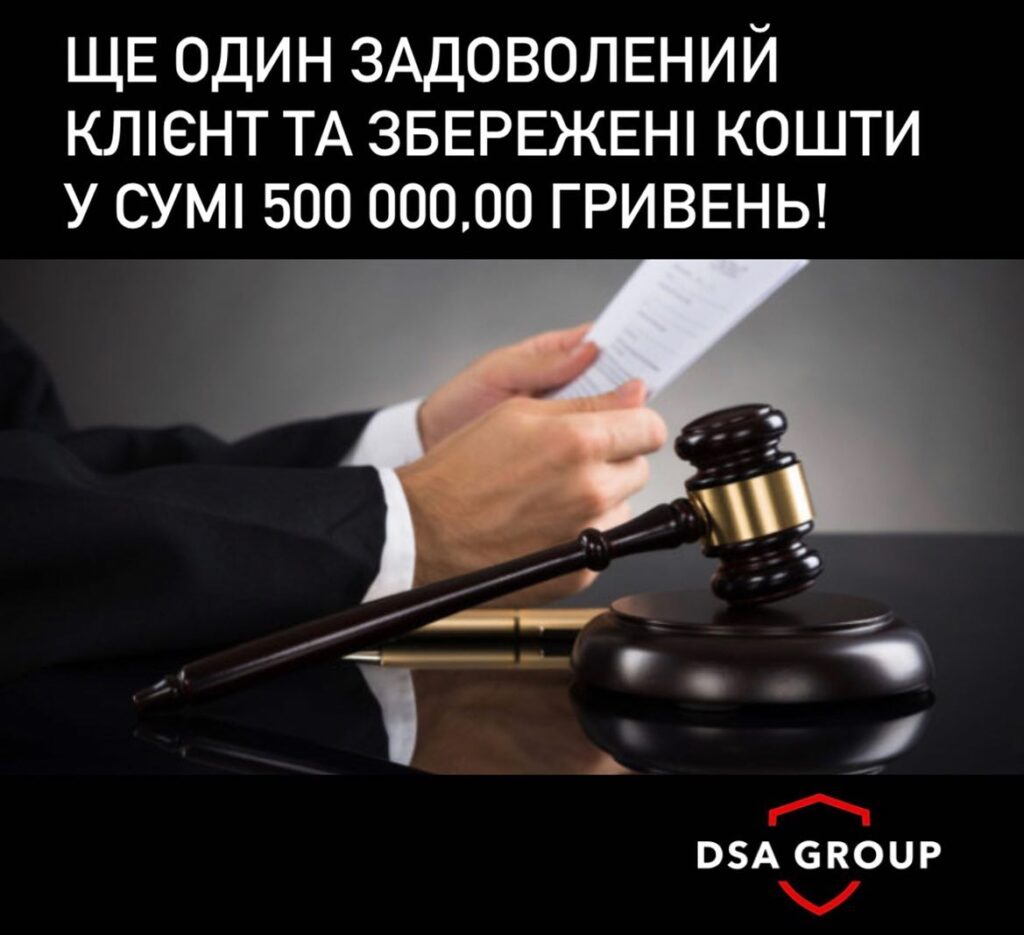
Fine of UAH 500,000 for “storing fuel without a licence” cancelled
The tax authority fined a company UAH 500,000 for “storing fuel without a licence”. The court cancelled the decision: the gas was bought for heating.