
Defence in the court of first instance
First consultation free of charge (Mon–Fri, 9:00–18:00)
Call +380 (97) 158-30-28The trial is the stage at which evidence is examined directly. The outcome turns on preparation: a considered position, work with witnesses, and motions filed at the right moment.
When to get in touch
- the case has been sent to court and a preparatory hearing has been listed
- the trial on the merits has begun
- you need to change lawyers at the trial stage
- evidence needs to be examined that was not examined before
Recognise your situation?
First consultation free of charge (Mon–Fri, 9:00–18:00). The fee for further work is agreed in writing before it begins – how we calculate fees.
What the lawyer does
- studies the case file and forms the defence position
- appears at the preparatory hearing
- files motions, including on the inadmissibility of particular evidence
- examines witnesses and victims
- takes part in closing argument
- prepares the documents needed to appeal the judgment
The preparatory hearing
Once the indictment is received, the court schedules a preparatory hearing no later than five days later (part 1 of Article 314 CrPC). At that hearing the court may (part 3 of Article 314 CrPC):
- approve an agreement, or refuse to approve it and return the proceedings to the public prosecutor;
- close the proceedings on the grounds set out in clauses 5–8 and 10 of part 1 or part 2 of Article 284 CrPC – in particular because the time limit for the pre-trial investigation after notification of suspicion has expired (see “Closing criminal proceedings”);
- return the indictment to the public prosecutor if it does not meet the requirements of the CrPC (see “Returning the indictment to the prosecutor”);
- send the indictment to another court if the case is outside its jurisdiction;
- set the case down for trial.
In preparing for trial, the court decides motions to summon persons for examination, to obtain items or documents and to hold the trial in closed session (clause 4 of part 2 of Article 315 CrPC), and, on a motion by the participants, may impose, change, extend or revoke a preventive measure (part 3 of Article 315 CrPC). A defendant accused of a crime punishable by imprisonment for more than ten years is told of the right to ask for the case to be heard by a panel of three judges (part 4 of Article 315 CrPC).
The scope of the trial and the standard of proof
- The trial is held only in respect of the person charged and only within the scope of the indictment; the court may go beyond it only by changing the legal classification of the offence, and only if this improves the person’s position (parts 1 and 3 of Article 337 CrPC). During the trial the public prosecutor may amend the charge, bring an additional charge or withdraw from the prosecution (part 2 of Article 337 CrPC).
- No one is obliged to prove their innocence; a person must be acquitted if the prosecution does not prove their guilt beyond reasonable doubt, and all doubts as to whether guilt has been proved are resolved in the person’s favour (parts 2 and 4 of Article 17 CrPC).
- A judgment of conviction may not be based on assumptions (part 3 of Article 373 CrPC). A judgment of acquittal is delivered if it has not been proved that the criminal offence was committed, that the defendant committed it, or that the defendant’s act contains the elements of a criminal offence (part 1 of Article 373 CrPC).
Examination of evidence
- The court examines evidence directly and hears testimony orally; information that has not been examined directly by the court cannot be accepted as evidence, except as provided by the CrPC (parts 1–2 of Article 23 CrPC). The prosecution must ensure that its witnesses attend so that the defence can examine them (part 3 of Article 23 CrPC).
- After the opening statements, the prosecution’s evidence is examined first and the defence’s second; the scope and order of examination are set by a ruling of the court (parts 1–2 of Article 349 CrPC).
- If the participants do not object, the court may decide that it is unnecessary to examine evidence on circumstances that no one disputes – but those circumstances then cannot be challenged on appeal (part 3 of Article 349 CrPC). Agreeing to this should be a deliberate choice.
- A prosecution witness is examined first by the public prosecutor, a defence witness by defence counsel; leading questions are not allowed in direct examination. The other side then cross-examines, and leading questions are allowed (parts 6–7 of Article 352 CrPC).
Inadmissible evidence
Evidence obtained through a substantial violation of human rights and freedoms is inadmissible, as is any other evidence obtained thanks to information acquired through such a violation (part 1 of Article 87 CrPC). The court must treat as substantial violations, in particular, procedural actions that require prior court authorisation being carried out without it or in breach of its essential conditions; obtaining evidence through torture or cruel treatment or the threat of it; violation of the right to defence; and obtaining testimony from a person who was not told of the right to refuse to testify (clauses 1–4 of part 2 of Article 87 CrPC).
The parties may file motions to declare evidence inadmissible during the trial (part 3 of Article 89 CrPC). As a rule, the court decides on admissibility in the deliberation room when delivering its decision, but declares evidence that is obviously inadmissible to be so straight away – it is then not examined (parts 1–2 of Article 89 CrPC). The court may not admit as evidence information from materials that a party did not disclose at the end of the investigation (part 12 of Article 290 CrPC; see “Access to the case materials”).
Closing argument, last word and judgment
- In closing argument, only evidence examined at the hearing may be relied on; the court may not limit the length of closing argument to a set time (parts 5–6 of Article 364 CrPC).
- After closing argument, the defendant has the right to a last word; its length is not limited, no questions may be asked during it, and if the defendant reports significant new circumstances, the court resumes examining them (Article 365 CrPC).
- The judgment may be appealed within thirty days of its pronouncement (clause 1 of part 2 of Article 395 CrPC) – see “Appealing a judgment: appeal and cassation”.
Legal basis
The time limits and general procedure for trial are set out in Article 318 of the Criminal Procedure Code of Ukraine, reasonable time in Article 28; the powers of the presiding judge in Article 321; the preparatory hearing and preparation for trial in Articles 314 and 315; the scope of the trial in Article 337; the examination of evidence and witnesses in Articles 23, 349 and 352; inadmissibility of evidence in Articles 87 and 89; the presumption of innocence in Article 17; closing argument and the last word in Articles 364 and 365; types of judgment in Article 373; and the time limit for an appeal in Article 395 of the Criminal Procedure Code of Ukraine.
Legislation and case law are updated over time; this page reflects the position as of November 2026.
Frequently asked questions
Can I change lawyers during the trial?
Yes. A defendant may engage defence counsel at any point in the criminal proceedings (part 1 of Article 48 CrPC) and may likewise dismiss defence counsel at any point (clause 3 of part 3 of Article 42 CrPC). New counsel may, on a motion, review the case materials and make notes and copies (part 2 of Article 317 CrPC).
How long does a trial take?
There is no fixed period: the trial must be held and completed within a reasonable time (part 1 of Article 318 CrPC). Reasonableness is assessed in the light of the complexity of the proceedings, the conduct of the participants and the way the court exercises its powers; proceedings concerning a person in custody or a minor are heard as a priority (parts 3–4 of Article 28 CrPC).
Does the defendant have to testify at trial?
No. The defendant has the right to say nothing about the charge or to refuse to answer questions at any time (clause 4 of part 3 of Article 42 CrPC); if the defendant refuses to testify, they are not examined (part 4 of Article 349 CrPC). Whether to testify is best decided together with defence counsel in the light of all the evidence.
Need legal assistance? Call us or leave a request – a lawyer will contact you and explain what to do in your situation.
How we work
-
You submit a request
-
We analyse your situation
-
We agree a strategy with you
-
We protect your interests


Similar services
- Returning the indictment to the prosecutor
- Defence in a jury trial
- Plea and reconciliation agreements
-
2020
year founded
-
9
attorneys on the team
-
11
practice areas
-
24/7
urgent legal assistance
Useful articles

Successful cases
-
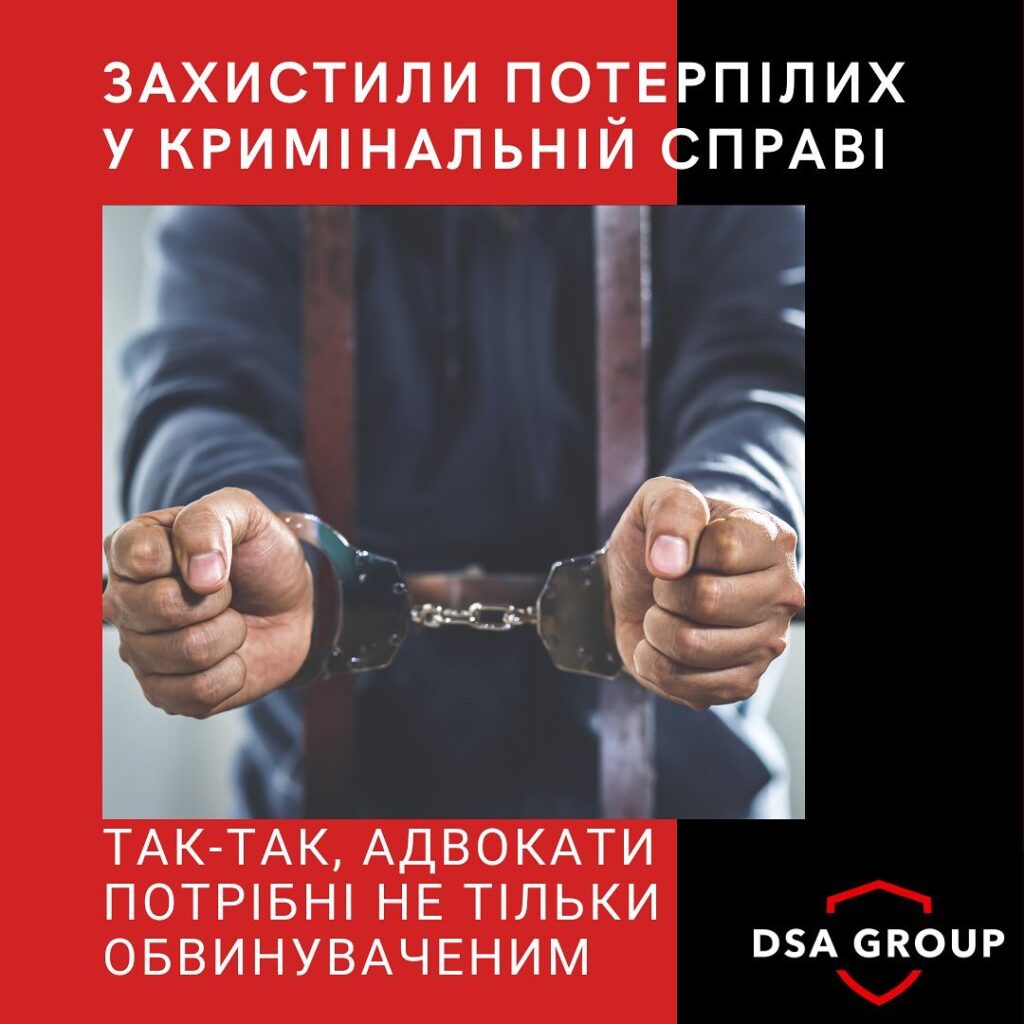 Won
Protecting victims: defendant sentenced to 5 years, damages awarded to our clients
Two clients suffered grievous bodily harm. The defendant was sentenced to 5 years, and UAH 264,498.22 was awarded to the victims.
-
 Won
Case under Article 369(3) of the Criminal Code closed as the investigation period expired: upheld by the Supreme Court
The indictment reached the court after the investigation period had expired. The case was closed under Article 284(1)(10) CPC; the Supreme Court agreed.